A garden sauna in winter — how to use it when it’s minus ten outside
December, frost and darkness by four in the afternoon. In theory, the perfect time for a sauna. In practice, the time you call us most often. We have gathered those conversations in one place.
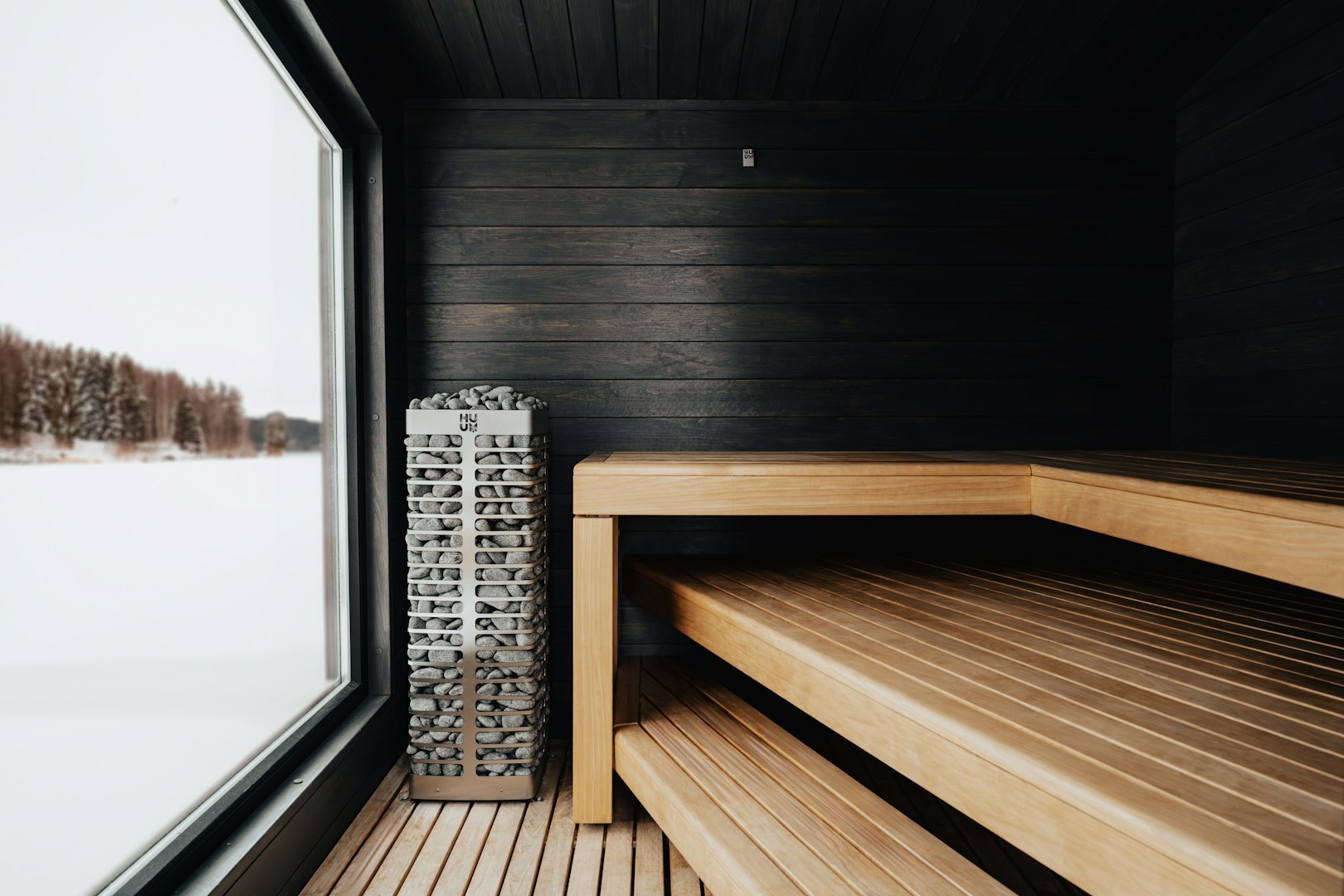
A winter view is a reason to have a window that you cannot appreciate in summer.
A garden sauna behaves differently in winter, and that is simply a different way of operating. The structure is exposed to frost on every side, the timber is cold right through and the temperature difference between inside and outside can reach one hundred degrees. Everything we describe below follows from that one figure.
1. A sauna takes longer to heat in winter — allow extra time
In summer, a well-insulated cabin reaches its operating temperature in 40–50 minutes. When it is a few degrees below freezing, the same heater usually needs 60–90 minutes. The reason is simple: before the air warms up, the heat has to penetrate the cold timber of the benches, walls and ceiling. Only once the structure has warmed through does it release heat back into the room — and the sauna starts to hold its temperature.
In practice, winter sauna sessions need planning rather than a decision five minutes beforehand. A timer or phone-controlled heater makes this easier: it starts automatically, and you step into a sauna that is ready to use.
The most common “fault” reported in December is impatience. A customer goes in after 40 minutes, sees 60 °C on the thermometer and concludes that the heater is too weak. Another half an hour solves the problem completely.
What not to do: turn the heater above the manufacturer’s recommended settings. The heating elements are already working at full power — a higher setting does not shorten the warm-up time, but it does shorten the life of the equipment.
2. Heater power: allow a margin rather than the bare minimum
As a rough starting point, allow 1 kW of heater power per 1 m³ of cabin volume for a well-insulated cabin. This is the starting point, rather than the final figure. Add an allowance for every surface that retains heat poorly:
- large glazed areas — each square metre of glass counts roughly as an extra 1.5–2 m³ of cabin volume,
- uninsulated or stone walls — a similar allowance applies,
- fully glazed doors — another square metre to account for.
A garden sauna has another characteristic that is easy to overlook when buying: unlike a cabin in a bathroom, all its walls, floor and roof are exposed to the cold. If the heater can barely cope in August, it will not cope in January.
3. Water is the greatest winter risk
Water expands by around 9% when it freezes, with a force no domestic plumbing system can withstand. It splits hoses, taps, pumps and filter cartridges. This is where most winter damage happens.
- If your sauna has a water supply, close the valve and drain the outdoor section for freezing weather — ideally, blow it through with compressed air.
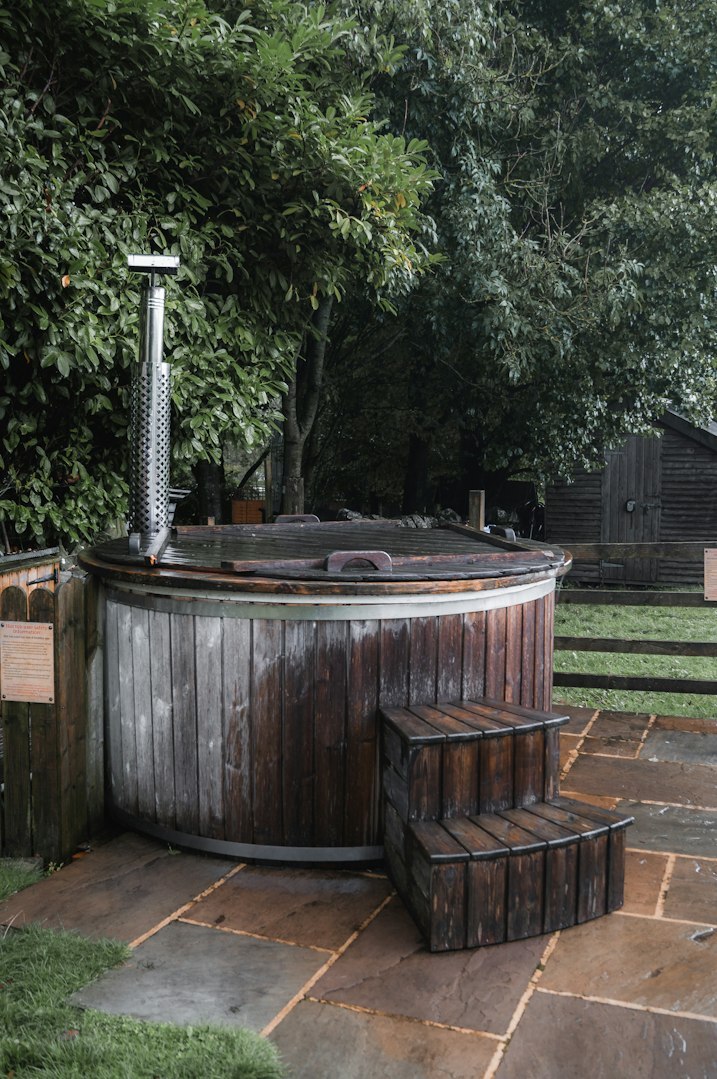
- A hot tub must either be kept above freezing with background heating and an insulated cover, or emptied completely — including the pump, hoses and filter. The in-between option, “a little water left in the bottom”, is the worst of all.
- Bring the bucket and ladle in for each session and take them away afterwards. Water left in a wooden container in freezing weather will split the staves.
If you are going away for a while and your sauna has plumbing, treat it like closing up a holiday cabin. One forgotten shower tap can cost more than a whole heating season.
4. Cooling down: enjoy the snow, but be sensible
The temperature contrast is central to sauna bathing, and in winter it comes free. Make use of it gradually: start with fresh air — a few minutes outside — then move on to snow, a cold shower or a plunge tub. Going straight from a hot cabin into icy water places a heavy strain on the cardiovascular system.
A sensible rhythm for most people is 2–3 rounds of 8–15 minutes, with rest and drinking water in between. Do not combine alcohol with sauna bathing: it dehydrates you and dulls the body’s natural warning signals.
If you have heart disease or high blood pressure, are pregnant or take medication that affects circulation, discuss sauna bathing and cold-water immersion with your doctor. This is practical advice: winter temperature contrasts place noticeably greater demands on your body than a summer session.
“The best sauna is the one you feel like stepping into on a Tuesday in November.”
5. The path to your sauna — a small detail that can spoil the season
Surprisingly often, winter sauna use depends on the ten metres between it and your back door. A few things to plan before the first frost:
- A slip-resistant surface — a walkway grid, rubber mat or rough paving. Wet timber decking at freezing point is an ice rink.
- A motion-sensor light — it is dark by five, and you are returning from the sauna in slippers and without your glasses.
- A covered entrance, or at least an overhang for towels, your dressing gown and shoes.
- Door handle and hinges: high humidity and frost can cause them to ice up. Sauna doors should not have a lock or be blocked; they open outwards when pushed.
6. Moisture and wood: ventilate after every session
The greater the temperature difference, the more condensation forms, so ventilation matters even more in winter. After the final round, leave the door ajar and the vents open until the cabin cools down. You can switch the heater off earlier; the residual heat will dry the interior effectively.
Treat the exterior cladding in autumn, before the season begins — rather than in freezing weather. Most oils and wood stains need temperatures above zero and a dry surface, otherwise they will not cure. Clear thick snow from a flat roof with a soft tool, such as a plastic shovel or a scraper on a pole. Never scrape timber boards with a metal shovel.
7. What to avoid — a short list
- Do not leave a wood-burning heater unattended or add fuel “for the night”.
- Do not dry clothes or towels on the heater — this is the most common cause of sauna fires.
- Do not close the vents to make the sauna “heat up faster”. Heating will take the same time, but the air will become stuffy and humid.
- Do not pour salt water or undiluted oils onto the stones. Dilute sauna oil in the bucket water; salt damages stones and heating elements.
- Do not clear snow from timber decking with a sharp tool.
- Do not wear jewellery in the sauna — metal at 90 °C can burn you.
Frequently asked questions
Can a garden sauna stand unused in winter?
Yes. The timber structure is designed for it and needs no background heating. Just drain any plumbing and provide ventilation to keep the interior dry. Before a longer break, give the sauna one full heating cycle and air it until dry.
How much does a winter session with an electric heater cost?
In practice, allow 8–14 kWh for warming up and an hour of use with a 6–9 kW heater in a well-insulated cabin. The heater cycles to maintain the temperature rather than running at full power throughout. At a typical Polish domestic electricity tariff, that amounts to roughly a dozen or so Polish zlotys per session. The figure depends on insulation, cabin size, frost and your electricity rate, so treat it as an indication rather than a quote.
Wood-burning or electric heater — which works better in winter?
A wood-burning heater produces more intense heat and does not depend on an electrical supply, but someone must tend it, light the fire and remove the ash. Electric heaters offer convenience: a timer, remote start and a sauna ready when you get home from work. Winter warm-up times differ little; your preferred routine matters more than the outdoor temperature.
Do I need to leave the heating on between sessions?
No. A sauna is not a living space, and frost will not damage anything inside it provided there is no water. Maintaining the temperature between sessions adds cost without benefit.
Planning a sauna you can use all year round?
We will match heater power to the cabin volume and glazing, and advise on insulation and frost-resistant plumbing. Quotes and advice are free.